#0382 NO HOLIDAYS THAT MY FAMILY HAD IN 10/2019,2020,2021,2022 2023,NOW for Life , BECAUSE OF KLAMTH FALLS,OREGON AND THE STATE OF THE UNION NOW , BECAUSE OF SOME PETTY PEOPLE OUR WHOLE LIVES FOR NO REASON AT ALL!

Monday, March 3, 2025

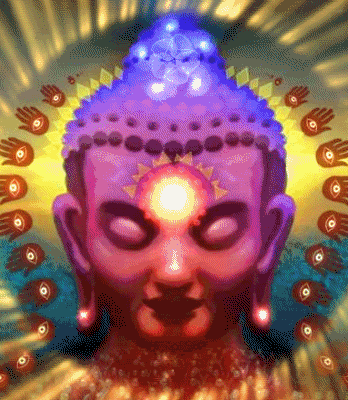
Eclipses in 2025A total lunar eclipse on March 14. A partial solar eclipse on March 29.March 2025 brings both total lunar and partial solar eclipse. During March 2025, Venus and the moon are the “stars” of the sky show for the month.The upcoming total lunar eclipse in March, which, unlike the total solar eclipse in April 2024, doesn't require special equipment to witness safely, is the first since November 2022. A total lunar eclipse, the first in nearly three years, will be visible across the U.S. the night of March 13 into early March 14.Strong Solar Flare Erupts From Sun23, 2025. NASA's Solar Dynamics Observatory, which watches the Sun constantly, captured an image of the event. Solar flares are powerful bursts of energy.VenusVenus will be most obvious because it is so bright, shining at magnitude –4.8 on March 1. It becomes obvious within 30 minutes of sunset. On that date, a slender crescent Moon stands 6.5° due south (to the lower left) of Venus.According to Timeanddate.com, the latest Easter Sunday can ever be is April 25—only five days beyond the date in 2025. The reason? A combination of the moon's elliptical, (easter) egg-shaped orbit of the sun and the date of a rare “Blood Moon” total lunar eclipse on March 13-14, 2025.A rare 'parade' of all 7 planets will move across the night sky this week. This chart of the night sky from NASA shows Mars, Jupiter, Saturn, and Venus in a "planet parade" in January 2025.The Bible mentions a blood moon in Joel 2:30–31 and Revelation 6:12 as a sign that will occur before the Day of the Lord. Joel 2:30–31"The sun will turn into darkness, and the moon into blood, before the great and terrible day of the Lord comes"Revelation 6:12"And I beheld when he had opened the sixth seal, and, lo, there was a great earthquake; and the sun became black as sackcloth of hair, and the moon became as blood".A blood moon is a total lunar eclipse, when the Earth casts a shadow on the moon, blocking sunlight. The moon appears red or ruddy brown because some sunlight bends through the Earth's atmosphere and reaches the moon. These passages are generally interpreted as prophecies about signs that will occur before the Day of the Lord, a time of divine judgment at the end of the world. ( AND The New Beginning ).Some believe that blood moons are a sign of the apocalypse. In the Book of Joel, it says, "the sun will turn into darkness, and the moon into blood, before the great and terrible day of the Lord comes.Some believe that people should avoid going out at night during a blood moon. In ancient Babylon, priests believed that the timing of a blood moon could predict whether a king would live or die. Some cultures believe that blood moons are signs from the gods. Though the word eclipse is not found in Scripture, some commentators believe there are allusions to a solar eclipse in passages such as Amos 8:9 and Acts 2:20.The mark of God is a symbol of the Holy Spirit that identifies believers as God's children. It's not a physical mark, but rather an inner transformation and relationship with God. The mark of God is a sign that God has accepted the believer as His adopted child. It's a promise of eternal life and a guarantee of inheritance. The third eye (also called the mind's eye or inner eye) is an invisible eye, usually depicted as located on the forehead, supposed to provide perception beyond ordinary sight. In Hinduism, the third eye refers to the ajna (or brow) chakra.( It is the Mark of God and the Holy Spirit and the Devil 👿 as well)The Spiritual Awakening of the Third Eye.In ancient Egypt, the third eye was known as the seat of the spirit or soul and used as a route to higher awareness and consciousness. Buddhists relate it to spiritual awakening, and Hindus to intuition and clairvoyance. The third eye is associated with the Eye of Horus, the Eye of Shiva, the straight poised snake of the caduceus, and the horn of the unicorn. It is the “eye” referred to in Matthew 6:22: “The light of the body is the eye: if therefore thine eye be single, thy whole body shall be full of light.” It is an organ of true vision, which opens in direct response to the individual’s spiritual development.These three head centers converge to form a triangle of amazing potency, powerfully blending the three main energies of the three major rays of Will and Power, Love-Wisdom, and Active Intelligence. This latent power of the three rays becomes manifest as a blazing light that enables the soul-infused personality to direct and synthesize these triple energies, and perform powerful work in service to mankind. As Alice Bailey observes:One of the fundamental rules back of all magical processes is that no man is a magician or worker in white magic until the third eye is opened, or in the process of opening, for it is by means of that eye that the thought-form is energised, directed and controlled and the lesser builders or forces are swept into any particular line of activity.( When one has a beautiful third eye they are Royalty 👑 or Royals and full Blooded Native American Indian. )

During the Old Kingdom of Egypt (circa 2686–2181 BCE), holidays and festivals were religious celebrations tied to the agricultural cycle of the Nile River and the divine power of the pharaoh Cosmic Balance (Ma'at): Egyptians believed festivals helped maintain ma'at (truth, balance, and cosmic order) by pleasing the gods and ensuring the continuation of life and nature The Nile's Flooding: Holidays honored the annual inundation (flooding) of the Nile, which left rich silt for farming and was viewed as a divine act of renewal and rebirth Royal Renewal: Celebrations reinforced the sacred, divine authority of the king, linking his rule directly to the favor of the gods to the Ancestors: Festivities included honoring the deceased with food and offerings at tombs to sustain spirits and secure their blessing Wepet-Renpet (Opening of the Year): The massive New Year's celebration marking the star Sirius rising and the start of the Nile flood, featuring grand meals, offerings, and royal appearances Sed Festival (Heb Sed): A royal jubilee held for a pharaoh after 30 years of rule (and periodically after) to renew the king's physical and divine strength to govern.The Sokar Festival: A solemn agricultural festival (which later merged with Osiris traditions) dedicated to the earth god Sokar, marking cycles of death and rebirth in the soil. The Old Kingdom of Egypt (c. 2686–2181 BCE) established a powerful central government and created monumental stone architecture like the Pyramids of Giza The Step Pyramid: Built at Saqqara for King Djoser by his architect Imhotep, marking the first major large-scale stone building. True Pyramids: King Sneferu perfected pyramid building with the Red Pyramid, leading directly to the construction of the Great Pyramid of Giza for Pharaoh Khufu. The Great Sphinx: Carved as a massive royal and symbolic monument during this era. Centralized Rule: Unified Egypt from a capital at Memphis, creating a stable political environment. Complex Bureaucracy: Developed an efficient system of regional administration, state-led taxation, and organized labor. Rise of Scribes: Created a new, educated class of scribes and officials who managed state resources Trade Networks: Expanded profitable trade routes with Nubia, the Sinai, and Levantine cities like Byblos to secure timber and luxury goods. Agricultural Control: Coordinated large irrigation projects along the Nile to maximize crop yields and feed a growing population. Christmas in Egypt is mainly celebrated on January 7 by Coptic Orthodox Advent Fast: Worshippers complete a strict 43-day vegan fast (known as the Holy Nativity Fast) starting in mid-November. No animal products: They abstain from meat, poultry, and dairy products as a form of spiritual discipline Church services: On January 6, families dress in new clothes and head to church for the long midnight mass. Hymns and prayers: Services feature traditional Coptic hymns and Bible readings that last well past midnight. Breaking the fast: Families return home late at night for a massive feast called Iftar. Fatta: The main dish is fatta, a savory mix of rice, crisp flatbread, boiled meat, and a rich garlic-vinegar sauce. Kahk: People bake and share kahk, which are sweet shortbread biscuits stuffed with nuts, dates, or sugar. Baba Noël: Father Christmas is known locally as Baba Noël. Children hope he climbs through windows and leave out small treats like kahk for him. Gifting money: Adults give children small monetary gifts or special envelopes (similar to Eidiya used during Eid) to celebrate By celebrating the gods and changing of the seasons, ancient Egyptians showed their love and appreciation for these greater powers The Legend of Sekhmet: Mythology tells of the warrior and healing goddess Sekhmet, who grew bloodthirsty while punishing humans. To save humanity, the sun god Ra tricked her by turning a vast field of beer red with pomegranate juice or red ochre. She drank it, fell asleep, and stopped the slaughter. Some modern pop culture and writers point to this blood-drinking story as an early precursor to vampire myths Ancient Mesopotamia (Sumer, Babylonia, and Assyria)Ekimmu: Considered by historians to be one of the earliest precursors to the vampire. These were the restless ghosts of people who suffered violent, unburied, or premature deaths. They were believed to return to the world of the living to feed on life essence, cause illness, and harass the living Empusae: Shape-shifting underworld demons sent by the goddess Hecate could transform into various shapes, and seduced young men before feasting on their flesh and draining their blood Lemures: Roman spirits of the restless dead who returned from the grave. While not strict blood-drinkers, they were feared household specters that required annual pacification festivals (Lemuria) to keep them from haunting the living The term vampire did not exist in ancient times. Blood drinking and similar activities were attributed to demons or spirits who would eat flesh and drink blood The modern idea of the vampire came from Eastern European folklore and 18th-century panic, though it was built on ancient stories of blood-drinking demoAncient Demons (Before 1000 AD) Mesopotamia: The earliest recorded ideas started with ancient spirits like Lilitu. Greece and Rome: People told tales of monsters like Lamia that attacked people in the dark. The Difference: ThesEastern European Folklore (1000–1700s) The Undead: The idea of a revenant—a dead body rising from the grave to hurt the living—started in Slavic and Balkan regions. First Writing: The word for vampire (upir) appeared in an Old Russian text in 1047. Real Panic: As the Queen's Gazette explains, communities faced real outbreaks of disease and decomposition they could not explain. This led to mass hysteria and villagers digging up bodies in the 1700se early creatures were viewed as gods or demons, not as dead humans who came back to life.ns

During the Old Kingdom of Egypt (circa 2686–2181 BCE), holidays and festivals were religious celebrations tied to the agricultural cycle...